
Jansky Lectureship
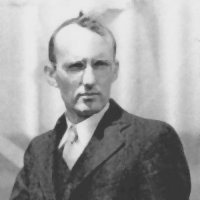 The Karl G. Jansky Lectureship is an honor established by the trustees of Associated Universities, Inc., to recognize outstanding contributions to the advancement of radio astronomy. First awarded in 1966, it is named in honor of the man who, in 1932, first detected radio waves from a cosmic source. Karl Jansky's discovery of radio waves from the central region of our Milky Way Galaxy started the science of radio astronomy.
The recipient of this award will present the annual Karl G. Jansky Lecture in Charlottesville, Virginia and in Socorro, New Mexico. The public lecture will be astronomical in nature. Professional astronomical symposia in NRAO facilities will be conducted prior to the evening lectures.
More detailed information about the nomination process can be found by viewing the Jansky Lectureship Charter.
Recipients of the Jansky Lectureship
The recipients of the Karl G. Jansky Lectureship, their award year, institutional affiliations, and lecture titles, are listed below.
| Year | Lecturer |
|---|---|
|
2023 |
Paul Vanden BoutNRAO
Space Molecules to Solar Systems: Millimeter Astronomy at NRAO - Some Personal Remembrances
|
|
2022 |
Francoise CombesParis Observatory
Symbiosis between Black Holes and Galaxies
|
|
2021 |
Luis F. RodriguezNational University of Mexico
Jets from Stars in the Making
|
|
2020 |
Martha P. HaynesCornell University
70 Years of Studying Hydrogen with Radio Telescopes: From Dark Matter to the Dark Ages
|
|
2019 |
Anneila SargentCalifornia Institute of Technology
Expanding Horizons with Millimeter/Submillimeter Astronomy
|
|
2018 |
Roger D. BlandfordStanford University
The Radio Harvest |
|
2017 |
Bernard FanaroffSquare Kilometer Array South Africa
Observing the Universe from Africa: Linking Radio Astronomy and Development |
|
2016 |
Jacqueline van GorkomColumbia University
Gas and Galaxy Evolution |
| 2015 |
Nick ScovilleCalifornia Institute of Technology
Star and Planet Formation through Cosmic Time |
| 2014 |
Jill TarterSETI Institute
Are We Alone? Searching for Intelligent Life Beyond Earth
|
| 2013 |
Charles L. BennettJohns Hopkins University
A Tour of the Universe
|
| 2012 |
Mark ReidHarvard-Smithsonian Center for Astrophysics
Measuring the Cosmos |
| 2011 |
Sander WeinrebNASA's Jet Propulsion Laboratory and the California Institute of Technology
Radio Astronomy from Jansky to the Future: an Engineer’s Point of View |
| 2010 |
Reinhard GenzelMax Planck Institute for Extraterrestrial Physics
The Galactic Center Black Hole and Nuclear Star Cluster
|
| 2009 |
Anthony ReadheadCalifornia Institute of Technology
The Central Engines that Power Active Galaxies |
| 2008 |
Arthur M. WolfeUniversity of California, San Diego
Finding the Gas that Makes Galaxies |
| 2007 |
Karl M. MentenMax Planck Institute for Radio Astronomy
Tuning in to the Molecular Universe |
| 2006 |
Frank J. LowInfrared Laboratories, Inc.
How the Spitzer Space Telescope was Designed, Tested and Built |
| 2005 |
Rashid A. SunyaevMax Planck Institute for Astrophysics
Cosmic Microwave Background Radiation, Clusters of Galaxies and Cosmology |
| 2004 |
Ronald D. EkersAustralia Telescope National Facility
Paths to Discovery |
| 2003 |
Donald C. BackerRadio Astronomy Laboratory, University of California at Berkeley
Massive Black Holes, Gravitational Waves, and Pulsars |
| 2002 |
Shrinivas (Shri) KulkarniCalifornia Institute of Technology
The Brightest Explosions in the Universe |
| 2001 |
William J. (Jack) WelchUniversity of California at Berkeley
Astronomical Arrays of the Future; Astronomy, SETI, and More |
| 2000 |
V. RadhakrishnanRaman Research Institute, Bangalore, India
Astronomy's Devices |
| 1999 |
Frank D. DrakeSETI Institute and University of California, Santa Cruz
Progress in the Search for Extraterrestrial Intelligence |
| 1998 |
Bernard BurkeMassachusetts Institute of Technology
Radio Telescopes: Reaching for the Astronomical Frontiers |
| 1997 |
P. James E. PeeblesPrinceton University
The Big Bang and Our Evolving Universe |
| 1996 |
James M. MoranHarvard Smithsonian Center for Astrophysics
Brilliant Masers and Mysterious Black Holes |
| 1995 |
Jocelyn Bell-BurnellOpen University, Milton Keynes, UK
Tick, Tick, Tick, Pulsating Star, How We Wonder What You Are |
| 1994 |
Vera C. RubinCarnegie Institution of Washington
What's the Matter in the Universe |
| 1993 |
David S. HeeschenFormer Director, National Radio Astronomy Observatory
The Development of Radio Astronomy in the United States |
| 1992 |
Irwin I. ShapiroHarvard-Smithsonian Center for Astrophysics
Reckoning the Size of the Universe Through Gravitational Lenses |
| 1991 |
Allan R. SandageThe Observatories of Carnegie Institution
The Quest for the Curvature of Space |
| 1990 |
Alan H. BarrettMassachusetts Institute of Technology
Molecular Radio Astronomy: The Beginnings |
| 1989 |
Joseph H. TaylorPrinceton University (Nobel Prize 1993)
Time and the Nature of the Universe |
| 1988 |
William A. FowlerCalifornia Institute of Technology (Nobel Prize 1983)
The Age of the Observable Universe |
| 1987 |
Hendrik van de HulstUniversity of Leiden, The Netherlands
Far from the Stars |
| 1986 |
Robert Hanbury BrownUniversity of Sydney
Stars, Photons, and Uncommon Sense |
| 1985 |
G. R. BurbidgeUniversity of California, San Diego
How Strange the Violent Universe? |
| 1984 |
Robert W. WilsonBell Laboratories (Nobel Prize 1978)
Millimeter Wave Astronomy |
| 1983 |
Arno PenziasBell Laboratories (Nobel Prize 1978)
The Astronomical Origin of the Earth's Materials |
| 1982 |
Philip MorrisonMassachusetts Institute of Technology
The New Waves: Fifty Years of Radio Astronomy |
| 1981 |
Martin ReesUniversity of Cambridge, England
The Next Hundred Billion Years |
| 1980 |
Martin SchwarzschildPrinceton University
What Shape Galaxies, Pancakes or Potatoes? |
| 1979 |
Maarten SchmidtHale Observatories
Quasars as Probes of the Early Universe |
| 1978 |
Subrahmanyan ChandrasekharUniversity of Chicago (Nobel Prize 1983)
General Relativity in Astronomy at Einstein's Centennial |
| 1977 |
E. Margaret BurbidgeUniversity of California, San Diego
Galaxies, Quasars, and the Space Telescope |
| 1976 |
Edward M. PurcellHarvard University (Nobel Prize 1952)
A Story of Spinning Particles |
| 1975 |
Grote ReberCSIRO, Tasmania, Australia
Beginning of Radio Astronomy |
| 1974 |
Lyman Spitzer, Jr.Princeton University Observatory
A Space Astronomer Looks at the Interstellar Medium |
| 1973 |
J. Paul WildCSIRO, Sydney, Australia
Exploring the Sun with Radio Waves |
| 1972 |
Bart J. BokSteward Observatory
Star Birth in the Galaxy |
| 1971 |
Charles H. TownesUniversity of California, Berkeley (Nobel Prize 1964)
Exploring for the Creation |
| 1970 |
Robert H. DickePrinceton University
Gravitation and the Universe |
| 1969 |
Fred HoyleUniversity of Cambridge, England
The Relationship of Astronomy and Physics |
| 1968 |
J. S. ShklovskySternberg Astronomical Institute, USSR
On the Variability of Cosmic Radio Source Emission |
| 1967 |
J. H. OortLeiden Observatory
Large-scale Distribution and Motion of Hydrogen in the Galaxy |
| 1966 |
John G. BoltonAustralian National Radio Astronomy Observatory
Radio Astronomy: Steppingstones to Quasars |


